Loading...
Skip to Content

Introduction to Web Accessibility

An Interactive Video
Home / e-Learning Projects / Introduction to Web Accessibility
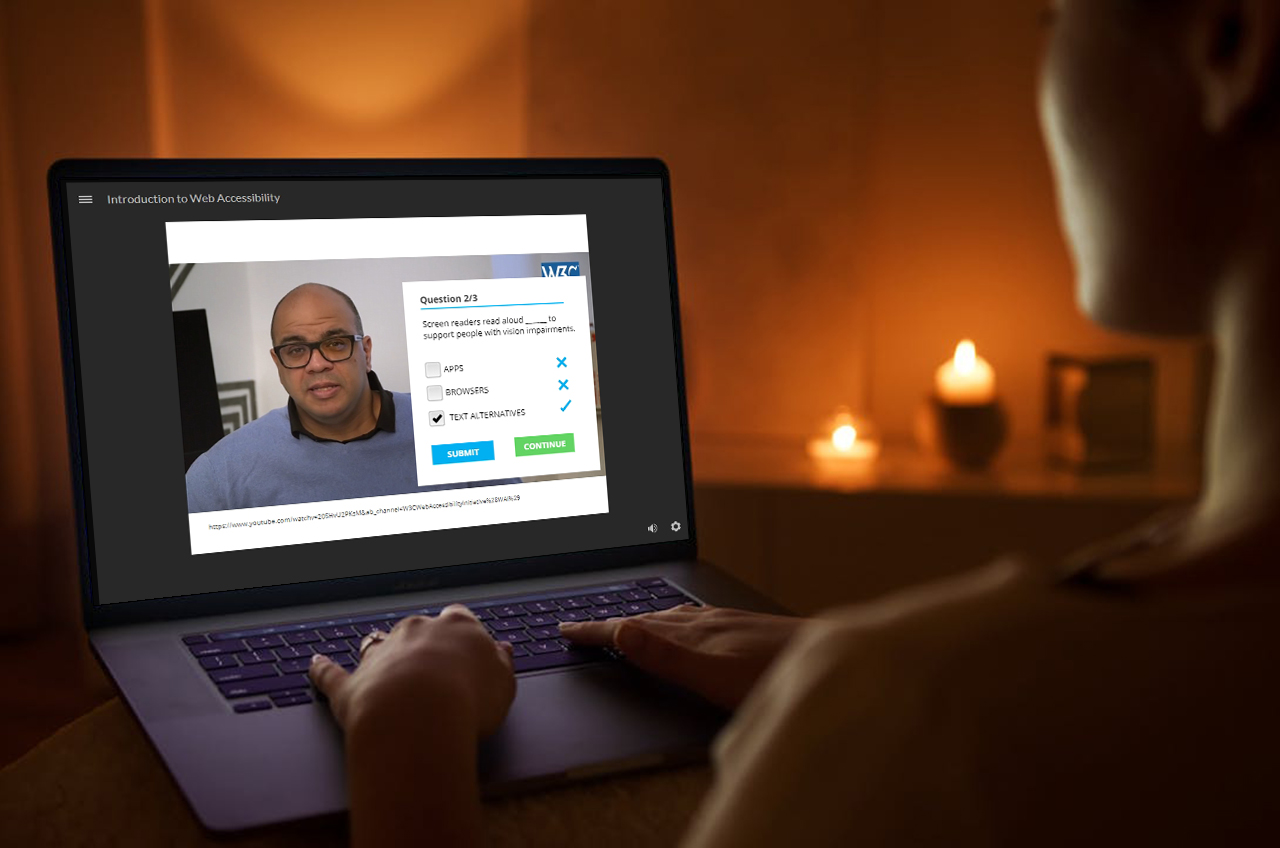
laptop showing Accessibility module

Project Overview

This lesson is part of a module that introduces web-accessibility and the W3C standards. It explores the benefits of accessibility and the Web Content Accessibility Guidelines. Formative assessments are incorporated to provide immediate feedback and identify areas of understanding. This module combines interactivity, animations, imagery and video to increase learner motivation and engagement.

Objectives: This module describes the barriers that people with disabilities face when navigating the web and how they rely on alternatives to information contained in, web-code, audio, and video content.

TOOLS

Articulate Storyline 360 | Camtasia

e-Learning

Interactive content, videos, multiple choice quizes, progression tracking.

AUDIENCE

Higher Education (Introductory)
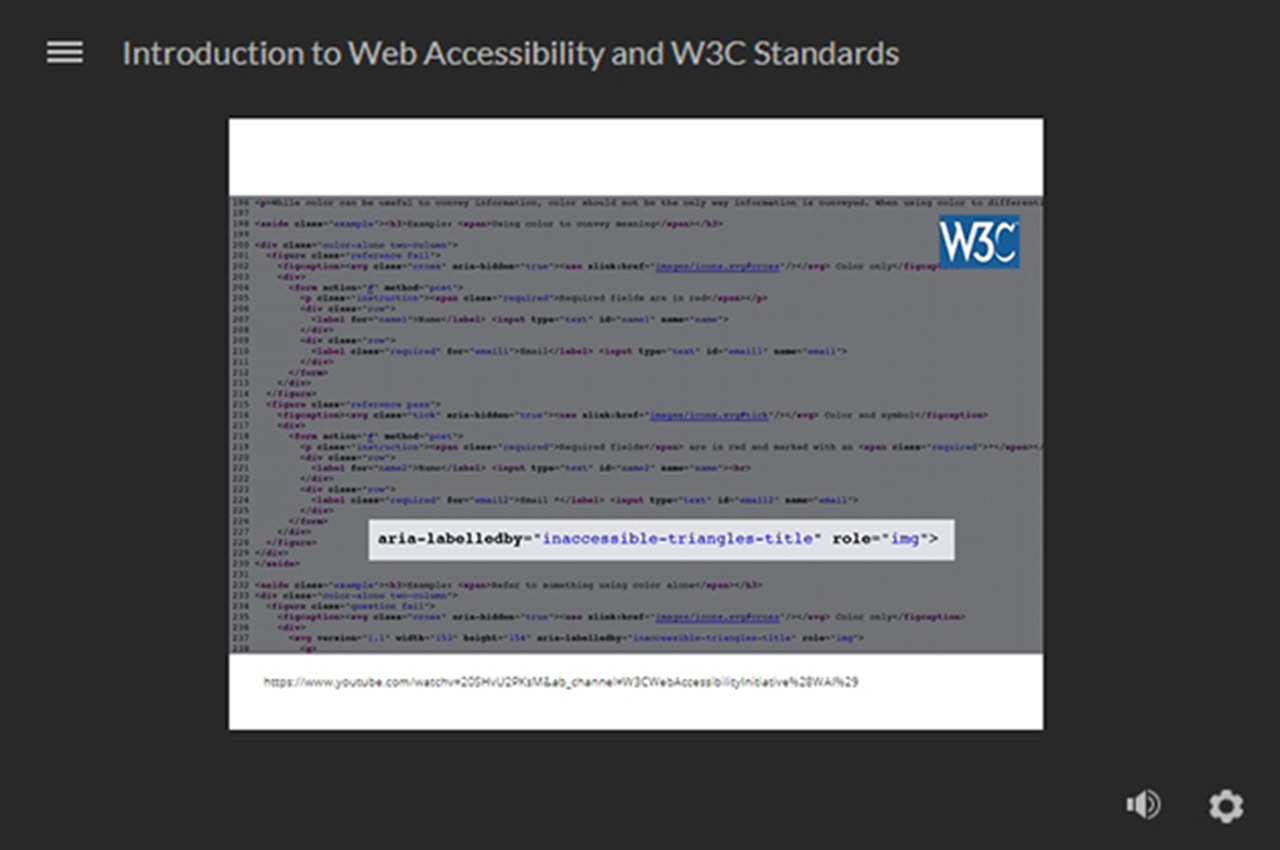
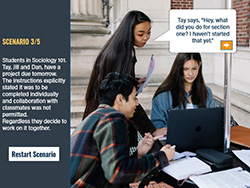
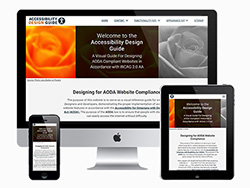
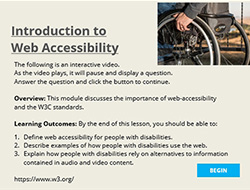
introduction screen of the design module
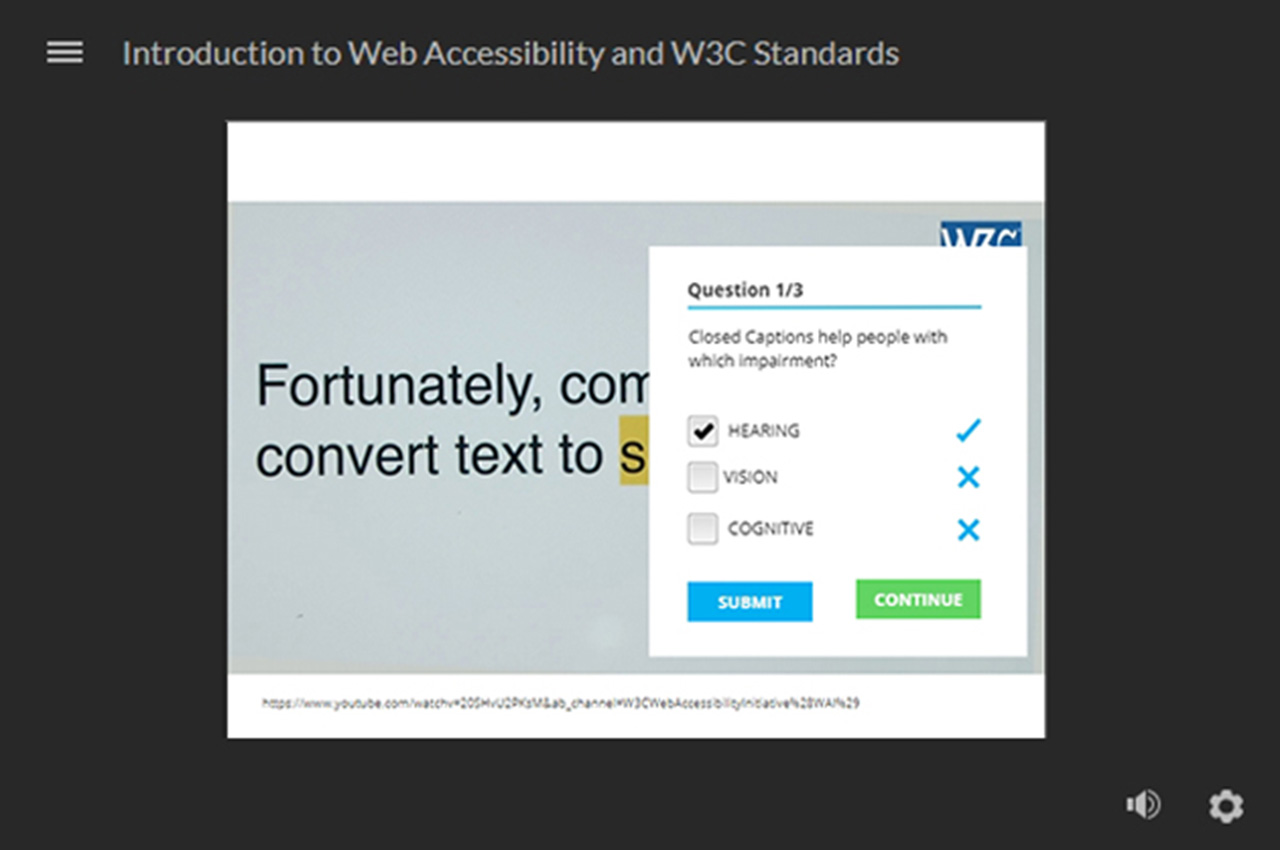
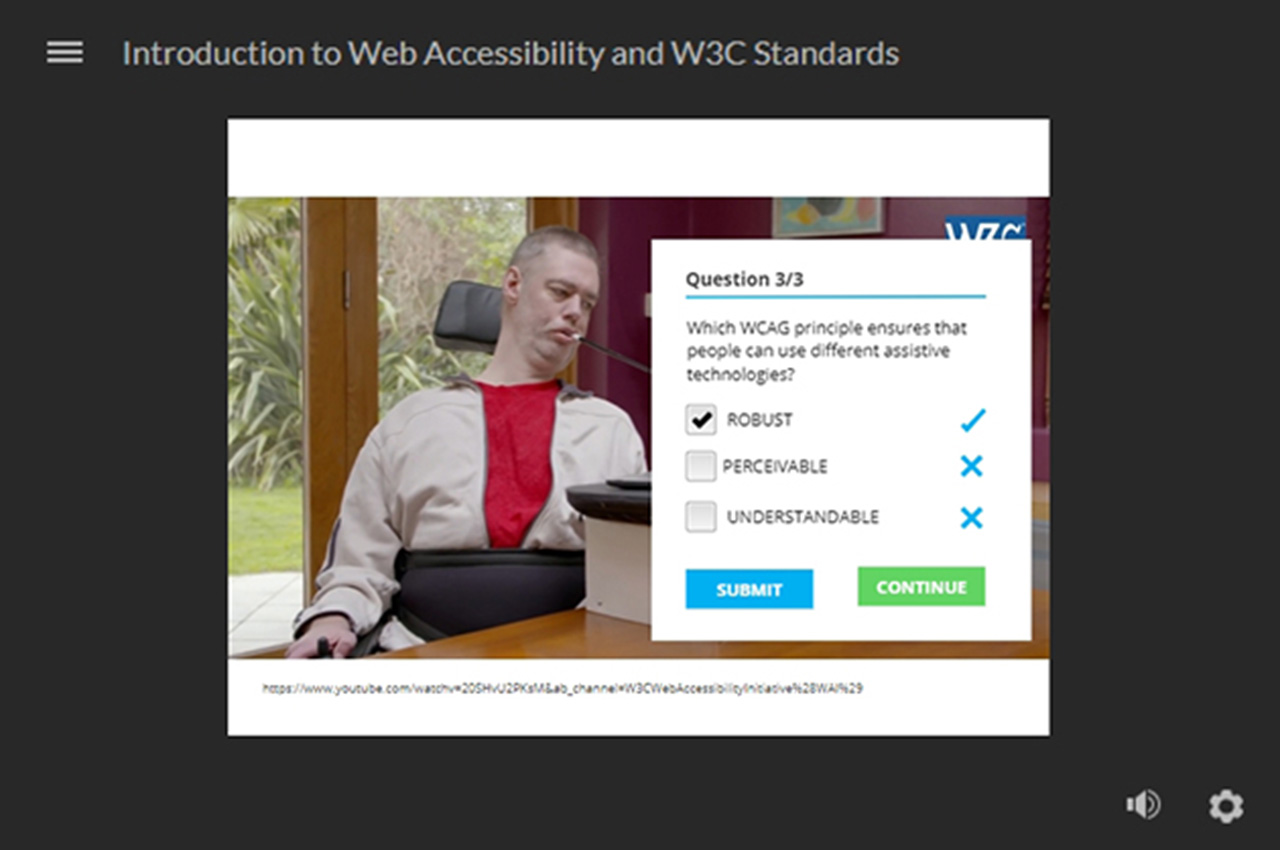
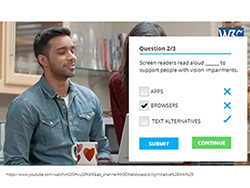
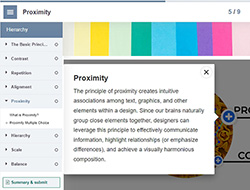
pop up example screen with quiz
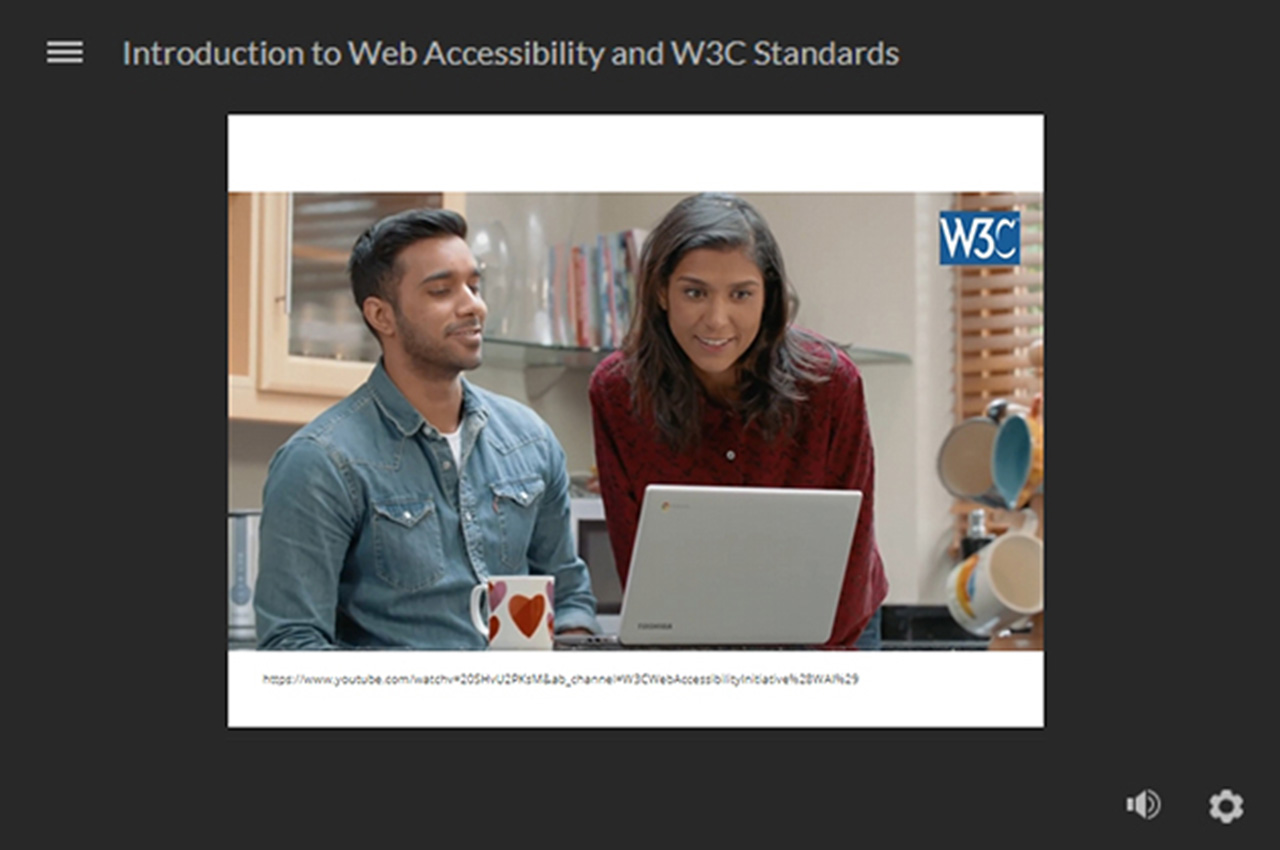
a man and woman looking at laptop
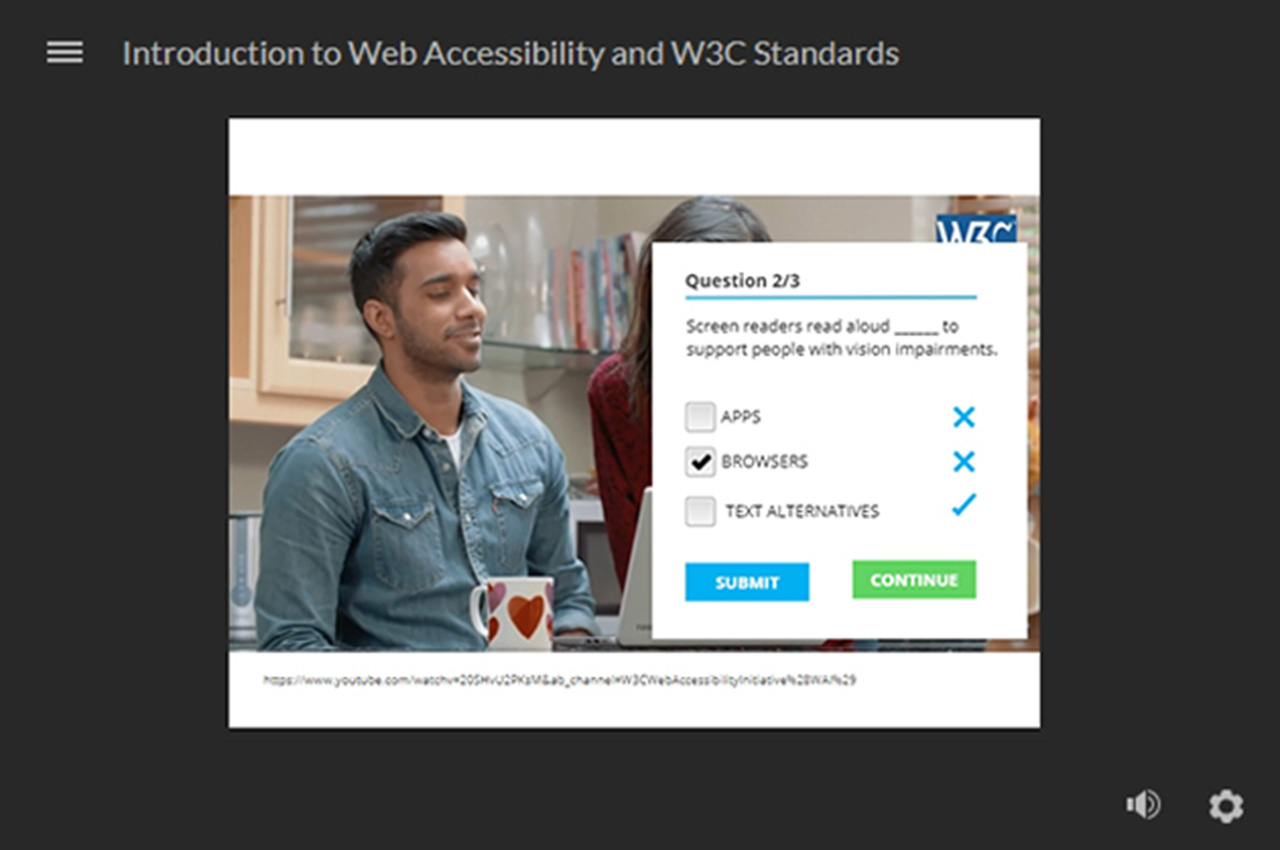
pop up example screen with quiz
man using a mouth tapper with screen reader
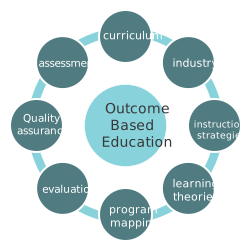
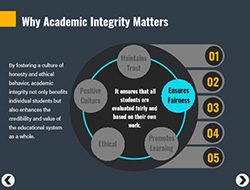
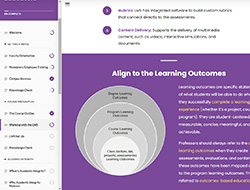
 diagram about outcomes-based education

Learning outcomes applied to this module

01.  Define web accessibility for people with disabilities.

02.  Examine examples of how people with disabilities use the web.

03.  Identify the WCAG web accessibility guidelines; Perceivable, Operable, Understandable, and Robust (POUR), and give examples of each.

04.  Examine how people with disabilities rely on alternatives to information contained in audio and video content.

{Project Toolkit}

I employ a variety of strategies to ensure that educational projects are effective, engaging, and meet the learning objectives.

Storyboards

I use storyboards to visualize the screen layout, including text, images, multimedia elements, and interactions. They also serve as a communication tool among SME's, stakeholders, graphic designers, and developers.

Flow Charts

Flowcharts help me plan and organize content, design learning paths, and map learning objectives to content, activities, and assessments. Afterwards, I share the flowchart with team members and stakeholders for feedback.

Prototypes

I use prototypes to design, test, refine, and improve before the final development. Depending on the project, I use prototyping tools such as Adobe XD, Sketch, Figma, or Articulate Storyline/Rise.

Web Coding

I leverage HTML/CSS, Bootstrap and other web technologies, to enhance e-learning content (e.g., to embedding videos, audio files, and other multimedia content into e-learning modules).
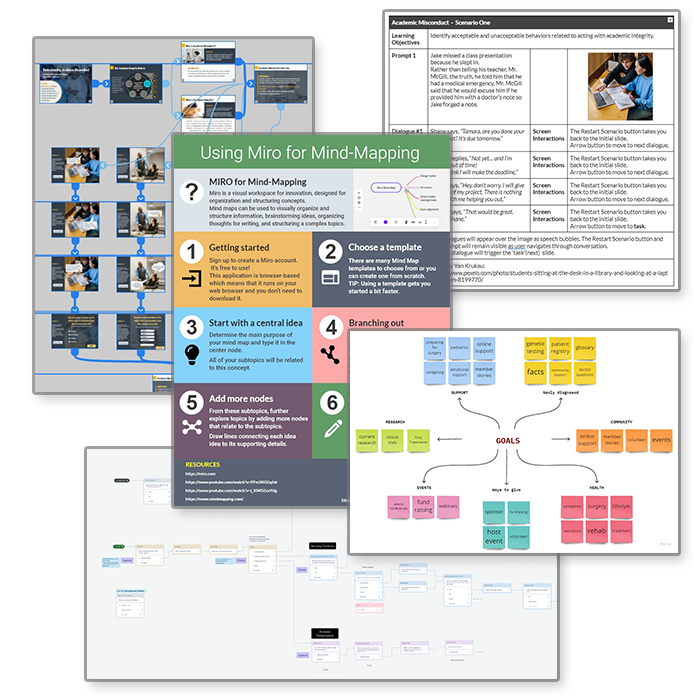
a collage of toolkit examples